What Causes VOCs
Last updated: 31 ส.ค. 2569 | 154 จำนวนผู้เข้าชม |

What Causes VOCs
Volatile Organic Compounds (VOCs) are chemicals that easily evaporate into the air at room temperature. VOCs can be released from many sources, including household products, industrial processes, fuels, solvents, building materials, and natural sources.
What Causes VOCs? Sources, Health Effects, and VOC Monitoring
Volatile Organic Compounds (VOCs) are chemicals that easily evaporate into the air at room temperature. VOCs can be released from many sources, including household products, industrial processes, fuels, solvents, building materials, and natural sources.
Understanding what causes VOCs and where they come from is essential for maintaining good air quality and protecting workers and the environment. Using a reliable VOC Meter or VOC Detector can help monitor VOC concentrations and identify potential exposure risks.
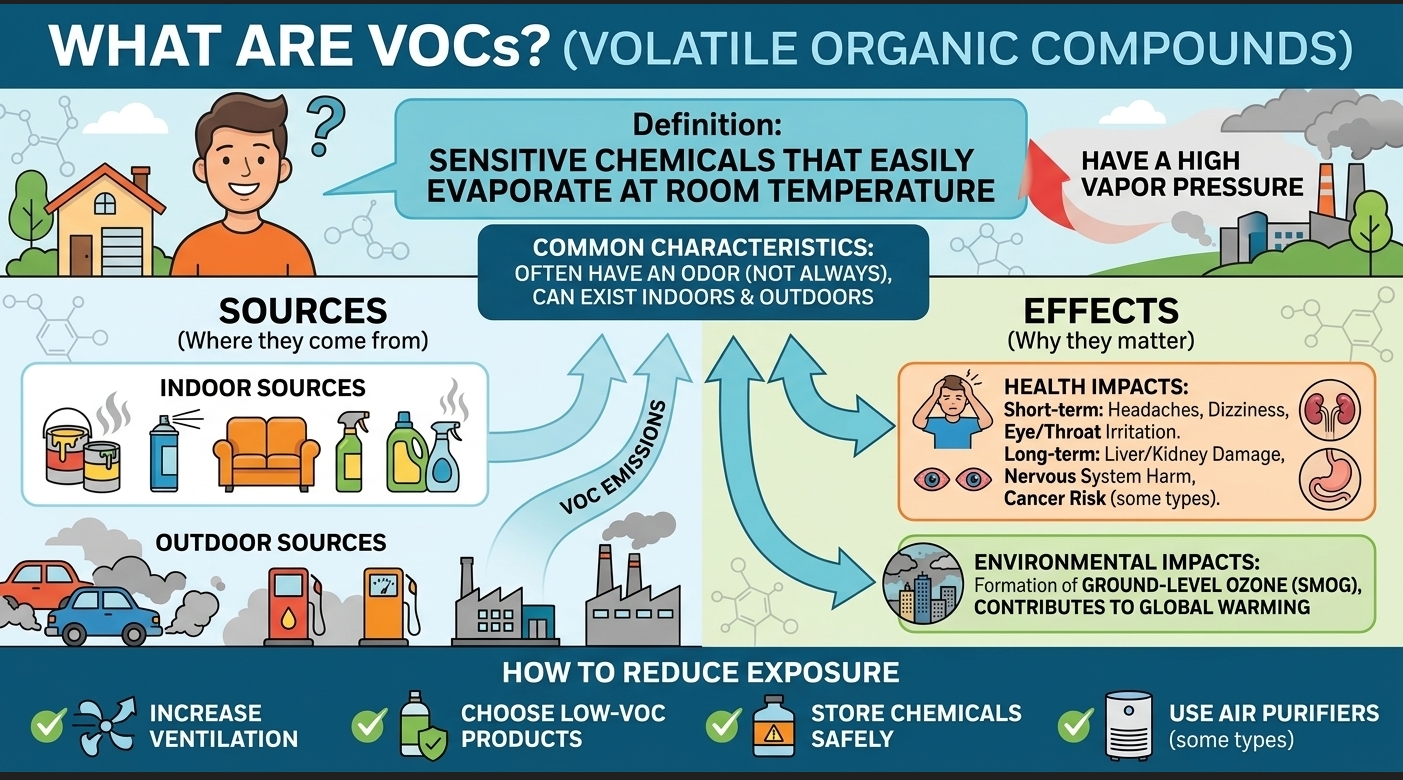
What Are VOCs?
Volatile Organic Compounds (VOCs) are a broad group of organic chemicals that have a high tendency to evaporate into the atmosphere. They can be found in both indoor and outdoor environments.
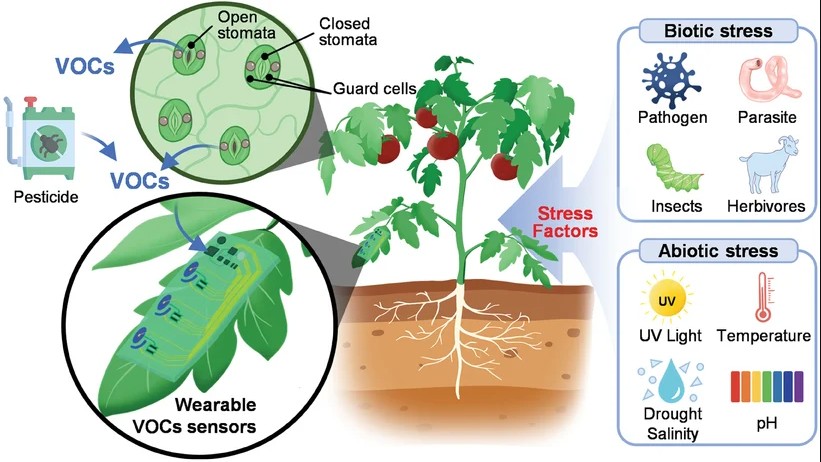
Some VOCs are released naturally by plants, while others are produced through human activities such as manufacturing, fuel processing, painting, cleaning, and the use of solvents.
The concentration and health effects of VOCs depend on the type of chemical, exposure level, and duration of exposure.
What Causes VOCs?
VOCs can come from a wide variety of sources. The most common sources include
1. Industrial Processes
Industrial facilities can generate VOC emissions during manufacturing, processing, storage, and transportation. Common sources include: Chemical manufacturing ,Oil and gas processing,Petrochemical operations,Paint and coating processes,Printing processes,
Solvent use,Fuel storage and handling,Chemical storage areas
In industrial environments, VOC concentrations can increase when chemicals are accidentally released, ventilation is insufficient, or processes are not properly controlled.
2. Paints, Solvents, and Adhesives
Paints, thinners, adhesives, glues, and cleaning solvents can contain VOCs that evaporate into the air.
These products are commonly used in factories, workshops, laboratories, construction sites, and maintenance areas. Proper ventilation and VOC monitoring are important when working with products that may release VOCs.
3. Fuel and Petroleum Products
Gasoline, diesel, crude oil, and other petroleum-based products can release VOCs through evaporation and handling.
Potential sources include:Fuel storage tanks Refueling stations Oil and gas facilities Petroleum processing plants Fuel transportation Loading and unloading operations Regular VOC monitoring can help identify abnormal VOC concentrations and support workplace safety procedures.
4. Household and Indoor Sources
VOCs are not limited to industrial environments. They can also be found indoors and may be released from: Cleaning products,Air fresheners,Aerosol sprays,Paints and varnishes,Furniture,Carpets, Adhesives,Building materials,Pesticides
New furniture, flooring, and other materials may release VOCs through a process known as off-gassing.
5. Vehicle Exhaust and Transportation
Vehicles and transportation activities are another source of VOC emissions. Fuel combustion and fuel evaporation can release VOCs into the atmosphere.
These emissions can contribute to outdoor air pollution and may participate in chemical reactions that contribute to the formation of ground-level ozone.
6. Natural Sources
VOCs can also occur naturally. Trees and plants release biogenic volatile organic compounds (BVOCs) such as isoprene and terpenes.
Natural VOC emissions are an important part of atmospheric chemistry and can vary depending on vegetation, temperature, sunlight, and environmental conditions.
What Are the Health Effects of VOC Exposure?
The health effects of VOC exposure vary depending on the specific compound and the level and duration of exposure.
Short-term exposure to high concentrations of certain VOCs may cause:Eye, nose, and throat irritation,Headache,Dizziness,Nausea,Fatigue Respiratory discomfort Some VOCs may cause more serious health effects following prolonged or repeated exposure. For this reason, identifying potential sources and monitoring VOC concentrations can be an important part of workplace and environmental safety.
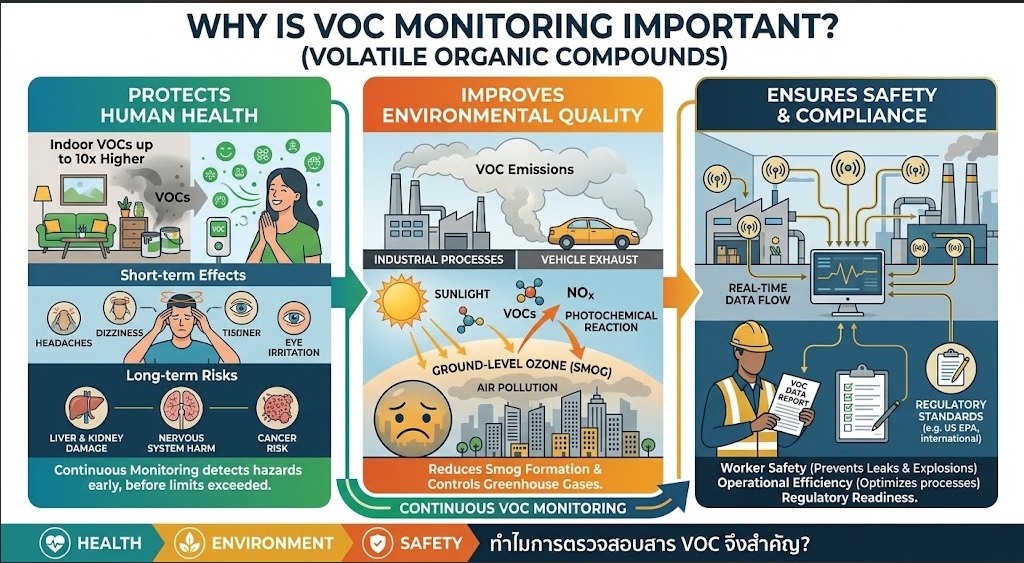
Why Is VOC Monitoring Important?
Because VOC concentrations can change quickly, visual inspection alone may not be sufficient to identify potential exposure.
A VOC Meter or VOC Detector can provide rapid measurements and help users: Detect changes in VOC concentration Identify potential VOC leaks or releases Check workplace air quality
Monitor areas where solvents or chemicals are used Support workplace safety assessments Investigate potential sources of VOC emissions For industrial applications, portable VOC monitoring instruments can be particularly useful because they allow measurements to be taken directly in the field.
VOC Detection with Photoionization Detection (PID)
One widely used technology for VOC detection is Photoionization Detection (PID).
A PID sensor uses ultraviolet (UV) light to ionize certain molecules in the air. The resulting ions generate an electrical current, which is measured by the instrument and converted into a VOC concentration reading.
PID technology is commonly used for rapid screening and monitoring of many VOCs in industrial hygiene, environmental monitoring, leak detection, and hazardous-area applications.
MiniRAE 3000+ Portable VOC Detector
For applications that require portable and rapid VOC monitoring, the MiniRAE 3000+ is a practical solution for detecting and measuring VOC concentrations.
Its PID technology is designed for fast response and can be used in a variety of applications, including industrial hygiene, environmental monitoring, chemical handling, and emergency response.
A portable VOC Detector such as the MiniRAE 3000+ can help safety personnel identify potential VOC exposure and make informed decisions when working in areas where volatile chemicals may be present.
Conclusion: Identify the Source and Monitor VOCs
VOCs can originate from many different sources, from everyday household products to industrial processes, fuels, solvents, transportation, and natural emissions.
Understanding what causes VOCs is the first step toward controlling potential exposure. Combining appropriate ventilation, safe chemical handling, workplace controls, and reliable VOC monitoring can help improve air quality and workplace safety.
For professional applications, a reliable VOC Meter or VOC Detector can provide valuable real-time information about VOC concentrations and help users respond quickly to potential changes in air quality.
MiniRAE 3000+ is one portable PID-based solution for VOC detection and monitoring, making it suitable for industrial, environmental, and workplace safety applications.
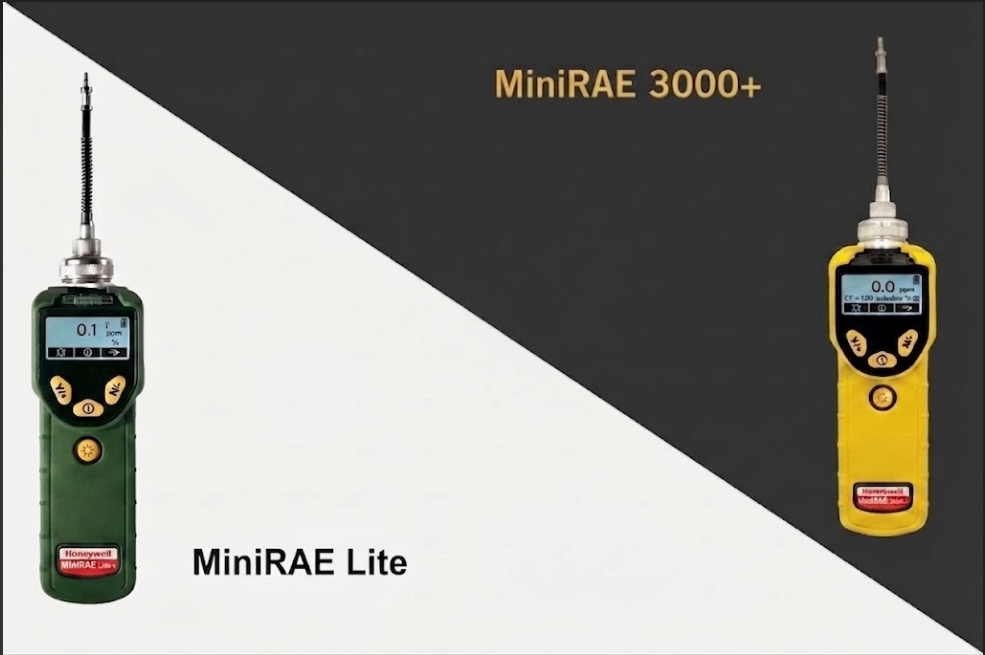
MiniRAE 3000+ vs. MiniRAE Lite
The MiniRAE 3000+ offers several advanced features compared to the MiniRAE Lite, including:
A wider detection range (0-15,000 ppm vs. 0-5,000 ppm for Lite).
Real-time wireless data transmission (Bluetooth and optional Mesh).
More expansive datalogging capabilities.
Greater sensitivity with built-in correction factors for hundreds of compounds.

เนื้อหาที่เกี่ยวข้อง

MiniRAE 3000+ VOC Monitor
27 ส.ค. 2569

MiniRAE 3000
1 ธ.ค. 2561
MiniRAE 3000+ Portable
31 ส.ค. 2569
MiniRAE 3000+ แบรนด์ Honeywell
30 พ.ย. 2564